About
Art as a question
My work explores the relationship between perception and reality.
Through color, sensation, nature, philosophy, psychology, literature and science, I question the idea of a single, fixed reality.
My paintings do not seek to give a definitive answer, but rather to open new perspectives — inviting the viewer to look again and always discover something different.
Biography
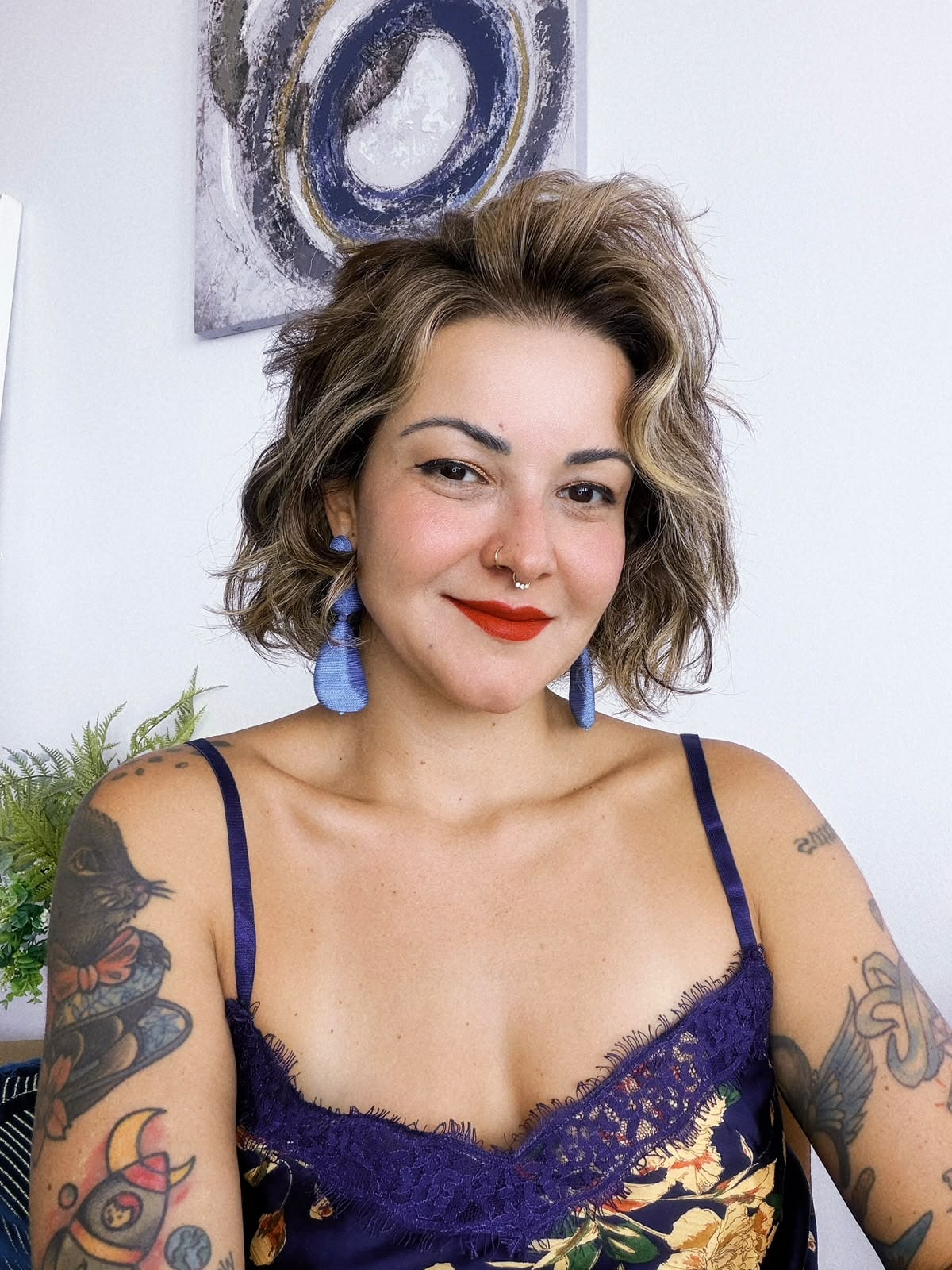
Erika Barros is a Brazilian painter based in Spain whose work emerges from her observation of life, personal experiences, and the questions they inspire.
Her paintings are characterized by an expressive use of color, movement, and contrast. Through both figurative and abstract elements, Erika explores themes such as identity, motherhood, emotions, the perception of reality, and the different ways in which we experience the world.
Her creative process is intuitive and experimental. An everyday experience, an emotion, or even a reflection on scientific and philosophical concepts can become the starting point for a painting.
In her work, color is more than an aesthetic choice — it becomes a language. Vibrant tones coexist with black, blue, and grey, expressing the coexistence of different emotional states, perspectives, and experiences.
An important part of her artistic identity also emerged alongside motherhood. During this period, Erika began to discover not only a new dimension of herself as a woman and a mother, but also her own voice as a painter.
Her work invites the viewer to look beyond first impressions and to embrace the idea that a single reality can hold contradictions, multiple perspectives, and many colors at once.
Artist Statement
History & Artistic Vision
For me, the work does not end when I put down the brush. It continues to transform in the perception of whoever observes it.
My relationship with art was born from a need to understand and question reality.
For much of my professional life I worked in the world of technology — an environment seemingly far removed from painting, but one that ended up deeply influencing the way I think. Technology taught me that what we see on a surface is merely the visible result of far more complex structures, codes and systems that exist behind it.
Over time, that idea began to blend with a restlessness that had always been present in me: what is reality, really?
I am interested in the distance between what is there and what we are capable of perceiving. Our senses capture only a part of the world around us and, even before the same reality, two people can experience completely different things.
That is why my work begins with perception.
I am interested in observing how our consciousness, our experiences, our emotions, our memory and our perspective modify what we believe we are seeing.
My painting draws on different territories that are part of the way I understand the world: nature, philosophy, psychology, spirituality, science and human experience itself.
I do not seek to use these fields to build a theory or to prove an answer. They interest me because all of them, from different places, somehow return to the same question: what do we really know about what we call reality?
Nature holds an important place in my imagination because it constantly reminds us that there are structures, forms, cycles and systems that function independently of our perception.
Philosophy and psychology allow me to explore the inner world and to ask to what extent what we see outside is also conditioned by what exists within us.
Science opens the question even further, showing that human perception represents only a small part of a much vaster universe.
And spirituality appears in my work as another territory for exploring what we cannot necessarily see, measure or explain, but which has been part of human experience for thousands of years.
Within all of this, color became one of my main languages.
I do not use color merely as an aesthetic element. I am interested in its capacity to alter perception, provoke sensations and completely transform our reading of an image.
The same form can become something different depending on the color that surrounds it.
The same work can generate calm, strangeness, curiosity, discomfort or fascination depending on who is looking at it and the moment in which they look.
That is precisely what I am looking for.
I do not want my paintings to have a single interpretation.
I do not want to tell the viewer what they should see.
I am interested in creating images that can keep changing after they have been finished.
That someone might look at a work today and find something; return to it months later and find something completely different.
That a form might seem recognizable and, at the same time, remain strange.
That different realities might coexist within the same image without one of them necessarily being the right one.
For me, the work does not end when I put down the brush.
It continues to transform in the perception of whoever observes it.
My work is situated precisely in that space: between what we believe we know and what we do not yet understand; between the visible and the invisible; between the outer world and the inner world; between certainty and possibility.
I paint because that question remains open for me.
And I want it to remain open within my works as well.
I do not want to define reality. I want to keep the question about it open.
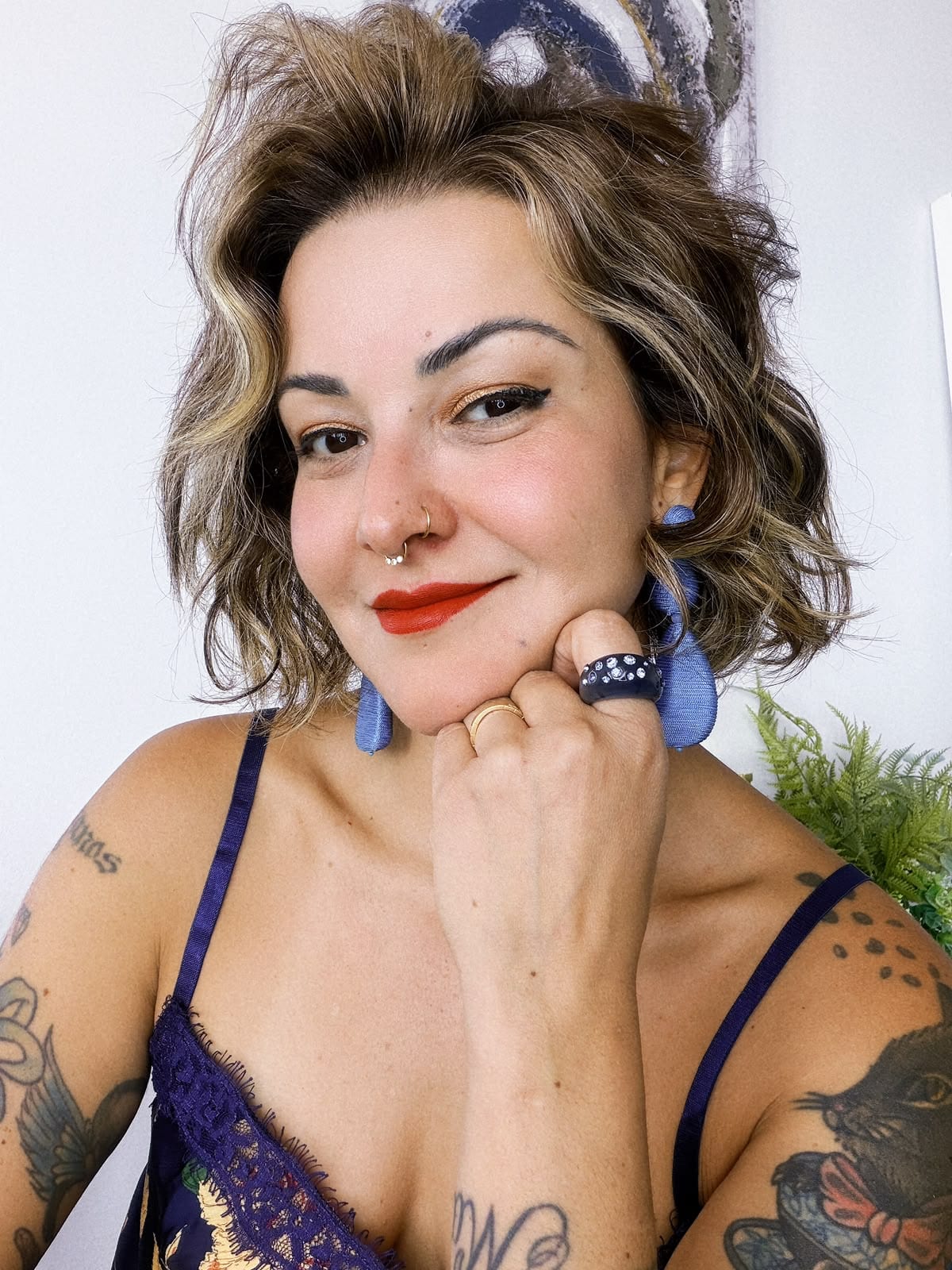
Erika Barros